Fractional Gold Krugerrand Sizes: Pragmatic Liquidity vs. Drag on Yield
With spot gold pushing past historic milestones well above R65,000 to R75,000 per troy ounce, everyday wealth preservers face an acute psychological and financial barrier: the capital outlay required to buy a single 1-ounce coin. As bullion prices reach record highs in South African Rand terms, this dynamic has turned renewed investor focus toward fractional gold krugerrand sizes.
Introduced by the South African Mint and Rand Refinery in 1980, fractional denominations,specifically 1/2 oz, 1/4 oz, and 1/10 oz coins, were designed to democratize private precious metals ownership. Yet many retail investors view fractional coins merely as “miniature” versions of the classic 1 oz Krugerrand.
In portfolio engineering, fractional bullion is not just smaller gold; it is an explicit trade-off between entry agility and yield drag. Every milligram of divisibility carries an inescapable economic surcharge known as the divisibility premium.
To build a resilient bullion allocation, investors must look past nominal affordability and evaluate how different fractional gold krugerrand sizes carry varying fabrication penalties per gram of fine gold.
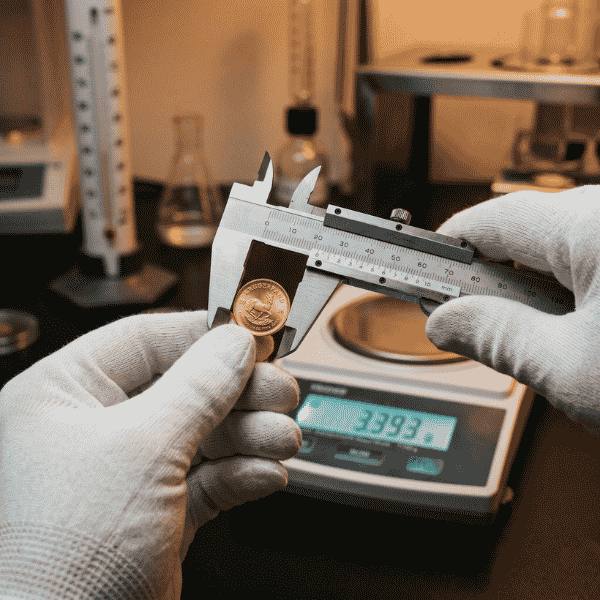
The Capital Outlay Barrier: Why Investors Turn to Fractional Gold Krugerrand Sizes
The nominal hurdle of acquiring whole-ounce bullion coins often delays market participation. When saving for a 1 oz coin takes six to twelve months, an investor sits unhedged while currency depreciation erodes purchasing power. Fractional denominations remove this barrier, enabling immediate market entry with lower nominal cash requirements.
However, divisibility introduces a structural pricing penalty that investors must evaluate before committing capital.
The Economics of Production: Why Smaller Fractional Gold Krugerrand Sizes Carry Higher Premiums
Why does a 1/10 oz gold coin command a dealer premium of 8% to 15% over spot, while a standard 1 oz Krugerrand trades at just 2% to 4% over spot?
The answer lies in industrial metallurgy and minting overhead.
+-------------------------------------------------------------------+
|               THE FABRICATION COST ESCALATOR                      |
|                                                                   |
|   Coin Size      Retail Premium Over Spot      Minting Overhead   |
|   1 oz           2.0% - 4.0%                   Lowest per gram    |
|   1/2 oz         4.0% - 6.5%                   Moderate           |
|   1/4 oz         7.0% - 10.0%                  High               |
|   1/10 oz        10.0% - 15.0%+                Highest per gram   |
+-------------------------------------------------------------------+
Striking a gold coin requires multiple physical stages: melting, rolling bullion sheets to precise tolerances, punching circular planchets (blanks), chemical annealing, rim burnishing, high-tonnage hydraulic striking, quality assaying, and tamper-resistant packaging.
These steps consume virtually the same labor, machine time, die wear, and quality control whether the coin weighs 3.39 grams or 33.93 grams.
When the mint produces ten 1/10 oz coins to equal a single ounce of pure gold, it must:
- Punch and burnish ten separate planchets.
- Complete ten precision hydraulic die presses.
- Conduct ten individual laser or acoustic quality assays.
- Package and transport ten separate items.
Because fixed industrial overhead is amortized across a much smaller mass of gold, the fabrication cost per gram escalates steeply. When you buy a 1/10 oz coin, a noticeable portion of your capital pays for manufacturing labor and distribution logistics rather than pure metal.
Physical Metrics Benchmark: Comparing Fractional Gold Krugerrand Sizes vs. 1 oz Coins
When examining the metallurgical purity across all fractional gold krugerrand sizes, the physical alloy remains strictly uniform: every denomination is struck in classic 22-karat crown gold (91.67% fine gold and 8.33% copper).
The copper alloy gives Krugerrands their distinctive warm hue while dramatically increasing hardness and scratch resistance compared to softer 24-karat pure gold coins. A 1 oz Krugerrand contains exactly one full troy ounce (31.103 grams) of pure gold; the added copper makes its gross scale weight 33.93 grams. Fractional variants preserve this exact mathematical ratio.
The data below provides an exact, verified benchmark of physical metrics across the flagship coin and the three official fractional gold krugerrand sizes:
| Denomination | Fine Gold Content (g) | Gross Scale Weight (g) | Diameter (mm) | Thickness (mm) | Standard Purity |
| 1 oz | 31.103 g (1.000 oz) | 33.930 g | 32.77 mm | 2.84 mm | 22 Karat (91.67%) |
| 1/2 oz | 15.552 g (0.500 oz) | 16.965 g | 27.07 mm | 2.21 mm | 22 Karat (91.67%) |
| 1/4 oz | 7.776 g (0.250 oz) | 8.482 g | 22.06 mm | 1.83 mm | 22 Karat (91.67%) |
| 1/10 oz | 3.110 g (0.100 oz) | 3.393 g | 16.55 mm | 1.35 mm | 22 Karat (91.67%) |
Before choosing a denomination, investors can reference a real-time gold price calculator to check current melt values against wholesale spot quotes.

Asymmetric Exit Spreads: Calculating Liquidity Friction Across Fractional Bullion Sizes
A frequent blind spot for retail precious metals buyers is underestimating how exit spreads vary across fractional gold krugerrand sizes when it comes time to liquidate.
Every bullion trade involves a bid-ask spread:
- Ask Price: What you pay the dealer (Spot + Minting Cost + Dealer Margin).
- Bid Price: What the dealer pays you upon repurchase (usually near Spot or slightly adjusted for market inventory).
                      BID-ASK FRICTION COMPARED

     1 oz Coin:     [Bid: 98% Spot] <--- 5% Spread ---> [Ask: 103% Spot]
   1/10 oz Coin:    [Bid: 100% Spot] <------- 13% Spread -------> [Ask: 113% Spot]
Dealers often repurchase fractional coins at a slight premium over raw spot gold because fractional stock is in steady retail demand. However, the total bid-ask percentage spread remains wider on small coins.
If you purchase a 1/10 oz coin at a 13% premium and sell it back at spot, gold must appreciate by 13% just for your position to break even. Conversely, a 1 oz coin bought at a 3% premium breaks even after a modest upward nudge in the spot price.
Investors planning short-to-medium holding horizons face friction if they allocate heavily into 1/10 oz units without factoring in this spread. Platforms that feature a transparent instant liquidity guarantee help narrow this gap by publishing real-time buyback bids.
Dollar-Cost Averaging (DCA): Accumulating Fractional Gold Coins vs. Cash Drag
Despite higher premiums, fractional coins excel in disciplined wealth accumulation: dollar-cost averaging (DCA).
Consider an investor who can allocate R10,000 per month toward physical gold bullion. With a full 1 oz Krugerrand priced around R70,000, the investor faces two choices:
Strategy A: Accumulate Cash to Buy 1 oz Units
- The investor hoards R10,000 per month in a bank account for 7 months.
- The Risk (Cash Drag & Timing Risk): During those 7 months, cash is exposed to purchasing power loss and Rand depreciation. If the live gold price in ZAR climbs 12% over that half-year, the target ounce now costs R78,400. The investor missed the rally while sitting in unhedged currency.
Strategy B: Purchase 1/8 to 1/4 oz Units Monthly
- The investor deploys R10,000 every month into fractional bullion immediately upon receiving their salary.
- The Trade-Off (Premium Drag): The investor absorbs a 6% to 8% dealer premium on each coin.
- The Strategic Benefit: By entering the market immediately, the investor captures market timing benefits, averages out spot volatility across price dips, and avoids keeping unhedged fiat currency in commercial accounts.
When modeling a disciplined monthly accumulation plan, the math demonstrates why smart savers rotate between fractional gold krugerrand sizes to mitigate cash drag while avoiding timing volatility.
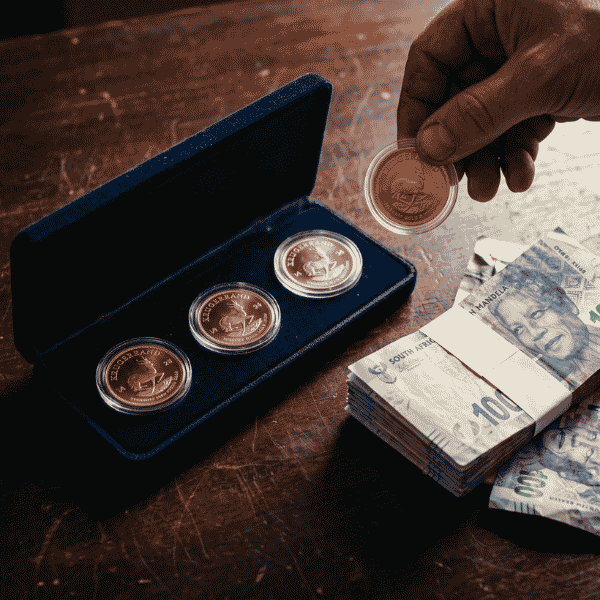
Pragmatic Crisis Defense: Divisibility and Utility of Fractional Krugerrands
Online bullion forums often discuss fractional gold through the lens of catastrophic survival scenarios, claiming 1/10 oz coins will serve as everyday “pocket currency” for groceries during systemic collapse.
A seasoned portfolio manager looks at crisis utility through a more pragmatic lens: staged liquidation and financial friction.
+-----------------------------------------------------------------------+
|                       STAGED LIQUIDATION SCENARIO                     |
|                                                                       |
|   Investor Needs R15,000 Cash for an Emergency Repair:                |
|                                                                       |
|   Holding ONLY a 1 oz Coin:       Holding FOUR 1/4 oz Coins:          |
|   Must liquidate full R70,000+    Liquidates ONE 1/4 oz coin (~R18k)  |
|   coin; R55,000 forced back into  Keeps remaining 3/4 oz safely       |
|   depreciating fiat currency.     stored in hard gold assets.         |
+-----------------------------------------------------------------------+
In ordinary life, liquidity needs rarely arrive in neat 1-ounce increments. If your vehicle engine fails or you face an unexpected tax assessment of R15,000, selling a full 1 oz Krugerrand forces you to liquidate your entire position, turning R55,000+ of hard assets back into cash.
Holding fractional coins allows you to sell off only the precise value required to satisfy an immediate obligation while leaving the remainder of your gold working inside your portfolio.
In severe geopolitical or monetary dislocations, portfolio defense relies on practical transaction utility, making fractional gold krugerrand sizes far more functional than a single 1 oz coin.
Portfolio Allocation Matrix: Selecting the Right Fractional Gold Krugerrand Sizes
Structuring your allocation effectively requires matching your monthly liquidity requirements to the unique economic profiles of fractional gold krugerrand sizes.
+-------------------------------------------------------------------------------+
|                       DENOMINATION SELECTION MATRIX                           |
+---------------+---------------------+--------------------+--------------------+
| Coin Size     | Target Investor     | Primary Advantage  | Main Trade-off     |
+---------------+---------------------+--------------------+--------------------+
| 1/10 oz       | Entry-level savers, | Maximum liquidity  | Highest premium    |
|               | emergency hedgers   | granularity        | drag (10% - 15%)   |
+---------------+---------------------+--------------------+--------------------+
| 1/4 oz        | Monthly DCA         | Optimal balance of | Moderate premium   |
|               | accumulators        | spread & budget    | (7% - 10%)         |
+---------------+---------------------+--------------------+--------------------+
| 1/2 oz        | Core wealth         | Near-wholesale     | Higher capital     |
|               | preservers          | pricing (4% - 6%)  | hurdle per unit    |
+---------------+---------------------+--------------------+--------------------+
| 1 oz          | High-net-worth,     | Maximum metal per  | Zero divisibility; |
|               | institutions        | Rand spent (2%-4%) | all-or-nothing exit|
+---------------+---------------------+--------------------+--------------------+
1/10 oz Krugerrand: The Liquid Entry Ticket
- Best For: Beginners testing the bullion market, young professionals starting small savings plans, or parents buying gifts for children.
- Portfolio Role: High-granularity emergency reserve. Think of the 1/10 oz coin as an insurance policy where convenience outweighs per-gram pricing efficiency.
1/4 oz Krugerrand: The Monthly DCA Sweet Spot
- Best For: Consistent middle-class savers allocating R15,000 to R25,000 per month into gold.
- Portfolio Role: The most practical compromise between premium efficiency and monthly cash flow. It carries roughly half the premium penalty of a 1/10 oz coin while remaining accessible without multi-month savings delays.
1/2 oz Krugerrand: The Near-Institutional Liquidity Proxy
- Best For: Established investors building multi-ounce positions who want partial-exit flexibility without paying retail fabrication markups.
- Portfolio Role: At a 4% to 6% premium, the 1/2 oz coin closely mirrors the cost efficiency of the 1 oz coin while providing two discrete liquidation tranches per ounce owned.
Explore ISA Gold Krugerrand Trading Platform to review current inventory across all weight classes.
The South African Macro Overlay: Legal Tender Status of Fractional Krugerrand Denominations
For domestic investors, Krugerrands carry significant regulatory and structural advantages over standard gold bars and foreign bullion coins.
Under the South African Reserve Bank Act, all Krugerrands, including fractional weights, are designated official legal tender in South Africa. This classification provides a major tax advantage: under directives from the South African Revenue Service (SARS), investment-grade legal tender gold coins are zero-rated for Value Added Tax (VAT).
Unlike silver bullion or collector items that incur 15% VAT upon purchase, you pay 0% VAT on legal tender Krugerrands.
Furthermore, South Africa’s macro environment is shaped by ongoing Rand volatility and currency depreciation. According to data tracked by the World Gold Council and Reuters Commodities, gold priced in ZAR has delivered steady long-term compounding over the last two decades, serving as an effective domestic wealth preserver.
Holding gold within South Africa eliminates the operational complexity of offshore currency transfers while anchoring wealth in an asset that tracks international London Bullion Market Association (LBMA) spot pricing.
Within the domestic regulatory framework, all official fractional gold krugerrand sizes enjoy full legal tender status under the South African Reserve Bank Act, conferring zero-rated VAT status.

Maximize Your Yield: Why Trade Fractional Gold Krugerrand Sizes with ISA Gold?
Because fractional bullion trades with wider spreads across standard retail channels, partnering with an efficient trading platform is essential to protect your net yields.
ISA Gold provides private investors with direct institutional-grade execution on both full and fractional coins. By linking directly into physical wholesale markets, the platform significantly tightens the buy-sell spread for retail clients.
To learn more about our operational heritage, read Who Is ISA Gold and Who Owns It? The Complete Founder Story to see how our leadership transformed precious metals trading across the region.
When you trade with ISA Gold, you gain access to:
- Tight Bid-Ask Spreads: Real-time spot pricing that cuts out unnecessary intermediary markups.
- Instant Liquidity: Guaranteed buybacks when you decide to sell gold coins.
- Fully Insured Vaulting: Professional secure vault storage with allocated, segregated custody options.
- Educational Support: Access to our comprehensive gold investment guide to structure your portfolio allocations.
Whether you are acquiring a single 1/10 oz coin or structuring a multi-tiered bullion vault, sourcing your fractional gold krugerrand sizes through ISA Gold delivers transparent spot-linked pricing and guaranteed buyback liquidity.
Frequently Asked Questions
What are the four official fractional Krugerrand denominations?
The South African Mint produces Krugerrands in four official gold denominations: the flagship 1 oz coin, and three fractional sizes introduced in 1980: 1/2 oz, 1/4 oz, and 1/10 oz. All four coins feature identical 22-karat crown gold purity.
Why do fractional Krugerrands cost more per gram than 1 oz coins?
Fabrication, striking, assaying, and logistics incur fixed manufacturing costs regardless of coin size. Because these overhead expenses are distributed across a smaller mass of gold, the mint and dealers apply a higher percentage markup over spot gold to cover production costs.
Are fractional Krugerrands subject to VAT in South Africa?
No. Because all Krugerrand denominations are recognized as legal tender under the South African Reserve Bank Act, they are zero-rated for VAT according to SARS regulations.
Which fractional Krugerrand size is best for monthly investing?
The 1/4 oz Krugerrand is generally regarded as the ideal option for systematic monthly dollar-cost averaging. It offers a balanced compromise between manageable nominal pricing and lower dealer premiums compared to 1/10 oz coins.
Can I easily sell back fractional Krugerrand coins?
Yes. Fractional Krugerrands are globally recognized and trade actively. Reputable bullion platforms like ISA Gold repurchase fractional coins on a daily basis with transparent, spot-linked bid quotes.
This article is for general educational purposes only and does not constitute financial advice. Gold prices change continuously; always confirm current figures directly with a dealer or platform before transacting.
Images used across the ISA Bullion blogs are AI-generated for illustrative and creative purposes only. They do not represent the exact appearance, specifications, or final quality of actual ISA Bullion products.