The Golden Rule of Bullion Custody: Why You Should Never Clean a Gold Coin
Global gold prices aggressively broke historical resistance levels throughout late 2026. Because of this, financial authorities like Bloomberg extensively analyze the ongoing surge. Meanwhile, South African heirs and investors open inheritance lockboxes at a record pace. Consequently, many people wonder how to clean gold bullion coins safely. First, an heir unboxes a slightly tarnished Krugerrand. Next, they notice a small red spot. Immediately, they reach for a microfiber cloth or a chemical dip.
As a seasoned vault conservator, I must issue an urgent market intervention. Novice investors constantly ask if they should clean gold bullion coins. However, any reputable dealer gives an absolute, uncompromising “No.” You must learn how to properly store these assets instead. Indeed, this remains the critical first step to long-term wealth preservation.
Specifically, this guide breaks down exactly why archiving your bullion beats domestic restoration. Furthermore, it explains why a pristine-looking coin rarely holds the highest resale value.
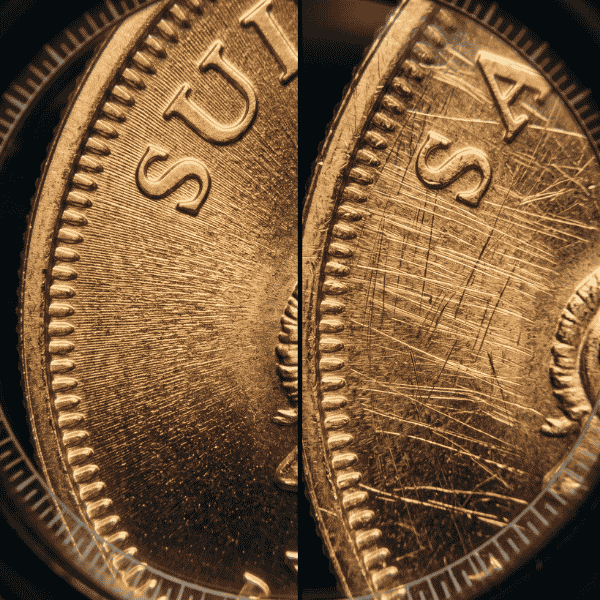
The True Financial Cost When You Clean Gold Bullion Coins
First, the psychological impulse to clean gold bullion coins usually strikes when an owner encounters natural metal patina. However, this well-intentioned care acts as the single fastest way to destroy secondary-market value. Therefore, we must establish a baseline rule for asset management. You must never clean gold coins. Unlike decorative jewelry, investment-grade bullion relies heavily on untouched structural integrity.
How Attempts to Clean Gold Bullion Coins Destroy Mint Luster
To understand the damage, you must first understand “mint luster.” The South African Mint strikes a blank planchet under hundreds of tons of hydraulic pressure. As a result, the metal flows outward from the center. This action creates microscopic radial ridges. Next, light hits these ridges and refracts. Consequently, it creates a beautiful spinning “cartwheel” effect.
Unfortunately, even the softest jeweler’s cloth introduces abrasive friction. Similarly, a mild baking soda paste polishes these microscopic ridges flat. This friction instantly causes mint luster damage hairlines. People who attempt to clean gold bullion coins often erase this luster entirely. Consequently, they leave a lifeless, artificially shiny surface. This altered surface immediately screams “amateur tampering” under an assayer’s magnification loupe.
The Financial Penalty: Uncirculated vs. Cull Melt
Sourced bullion in untouched condition commands the full spot price. Moreover, it often carries a modest buyback premium. In contrast, sellers who clean gold bullion coins face a harsh reality on the secondary market. They immediately suffer the cull gold coin discount.
An assayer quickly identifies chemical residue or abrasive hairlines. Following this, they downgrade the coin from “mint condition” to wholesale melt scrap. Importantly, this isn’t a theoretical loss. It costs the seller a direct 3% to 10% financial penalty upon liquidation. Ultimately, you pay the dealer a discount simply because you tried to make the coin look brighter.
Why You Must Never Clean Gold Bullion Coins to Remove Copper Spots
First-time buyers often experience major confusion regarding the composition of crown gold. The refinery mints the Krugerrand in 22-karat gold. Specifically, this contains 91.67% fine gold balanced primarily with copper. The Rand Refinery uses this specific alloy to dramatically increase durability. Therefore, the coin successfully resists deep gouges that easily damage pure 24k gold.
Because of this alloy, the surface may develop reddish toning or “copper spots” over time. This happens as the base metal reacts with trace environmental elements. Meanwhile, online forums overflow with queries on how to remove copper spots on gold krugerrand. What does the assayer advise? You simply leave them alone.
Perhaps you wonder whether you should clean gold bullion coins to remove these spots. Please resist the urge. Authorized dealers and LBMA accredited refiners fully accept natural oxidation. In fact, it proves the metallurgical authenticity of the asset. Conversely, scrubbing the surface renders the piece permanently impaired.
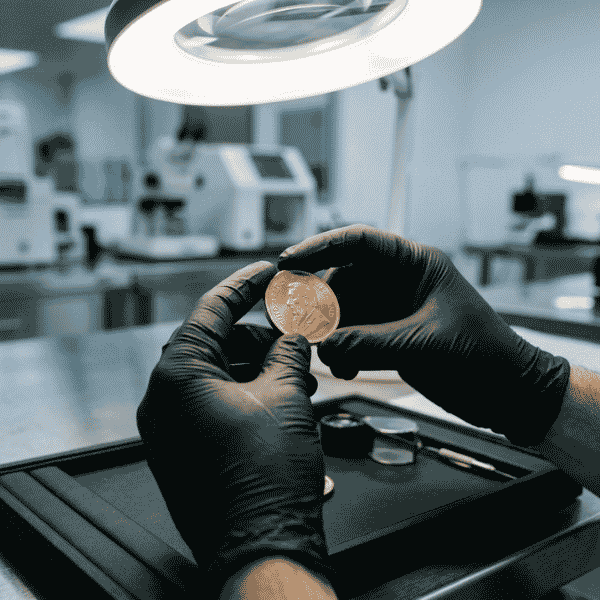
Physical Handling Protocols: The Assayer Standard
If you must inspect physical assets, you must follow strict protocols. Before you handle or clean gold bullion coins (which you must never do), learn the rules. You must master the basics of handling 22k gold bullion.
- Edge-Only Contact: First, hold the coin strictly by the reeded edge. Use only your thumb and index finger. Never press your fingers onto the front or back faces.
- Barrier Protection: Secondly, always wear powder-free, non-reactive nitrile gloves. Human skin oil contains acidic sebum. Over time, this sebum bonds to base-metal alloys and etches permanent fingerprints.
- Surface Padding: Finally, always work over a padded velvet or felt jeweler’s tray. Dropping a coin onto a hardwood desk leaves edge dings. Ultimately, this impact ruins its grade, a standard echoed by global authorities like the World Gold Council.
Archival Storage: Prevent Tarnish So You Never Clean Gold Bullion Coins
The absolute safest strategy ensures you never feel the need to clean gold bullion coins. You must store them in a clinically inert environment from day one.
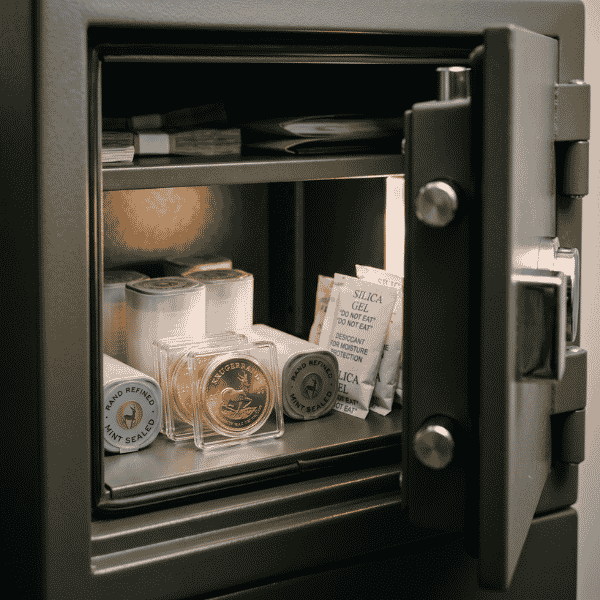
Many investors make a critical mistake. They store coins in cheap, flexible vinyl flips. Unfortunately, these plastics contain polyvinyl chloride (PVC). Over multi-year storage, the plasticizers break down. Next, they release hydrochloric acid. As a result, they leave a sticky, green, corrosive slime on the gold. Instead, you must utilize rigid pvc free coin storage capsules. Look for archival-grade acrylic options like Air-Tites. Furthermore, keep these inside a humidity-controlled safe with desiccant silica gel. Third-party grading giants like PCGS and NGC strictly demand this storage standard.
🇿🇦 South African Market Focus: Preserving Your Krugerrands
For the local investor, environmental awareness remains vital. You might battle the corrosive coastal humidity of Durban and Cape Town. Alternatively, you might face the dry, dusty conditions of the Highveld. Regardless, direct-fit encapsulation provides your best defense against the elements. South African collectors who mistakenly clean gold bullion coins immediately strip away their international liquidity. The Krugerrand represents the most widely traded bullion coin on earth. Therefore, keep it exactly as it left the mint. This discipline ensures global refiners and international buyers honor its full value.
Trading Krugerrands with ISA Gold
Understanding asset preservation solves only half the strategy. You must also partner with a deeply entrenched, authorized liquidity provider. Our article, Who Is ISA Gold and Who Owns It? The Complete Founder Story, highlights our decades-long commitment to secure precious metals trading.
When you maintain your portfolio perfectly, trading with ISA Gold ensures maximum returns. Specifically, we offer live gold prices with ultra-competitive spreads. Perhaps you want to buy Krugerrands directly. Alternatively, you might need to sell gold bullion from an inheritance. Whatever your goal, we built our secure infrastructure for you.
Moreover, we understand the exact nuances of 22k vs 24k gold bullion. Therefore, we provide fully insured secure vaulting alongside comprehensive bullion custody solutions. Consequently, you never have to worry about at-home handling risks again.
⚡ High-Intent Trading Action
Are you ready to liquidate or expand your holdings? Do not let your uncirculated Krugerrands sit un-appraised.
Safeguard Your Legacy and Liquidity
Ultimately, the preservation of physical wealth requires strict archival inaction. Therefore, leave the polishing cloths in the cabinet. Keep the chemical dips on the store shelf. In short, when you refuse to clean gold bullion coins, you actively protect your legacy. Furthermore, you safeguard your immediate market liquidity. Most importantly, you guarantee that your assets command their exact deserved premium when you finally decide to sell.
Frequently Asked Questions (FAQ)
Can I use a soft microfiber cloth to wipe my gold Krugerrand? No. Even soft microfiber cloths trap microscopic dust particles. Consequently, these particles act like sandpaper on gold. They cause fine hairlines that instantly reduce secondary market value.
Will copper spots lower the melt value of my Krugerrand? No. Copper spots and natural toning represent normal metallurgical reactions on 22K alloyed gold. They do not alter the fine gold weight. Furthermore, authorized dealers like ISA Gold will not penalize you for natural oxidation.
How should I remove a fingerprint from my gold coin? If a fingerprint is fresh, an expert conservator might use a specialized, non-abrasive solvent dip. For instance, they might use pure acetone to dissolve oils without rubbing. However, DIY attempts usually cause severe harm. Therefore, you should leave it alone and consult a professional assayer.
Are PVC flips really that dangerous for gold coins? Yes. Polyvinyl chloride off-gasses hydrochloric acid over time. This happens especially in warm climates. As a result, it creates a sticky, corrosive green residue. Always use rigid, PVC-free acrylic capsules for long-term storage.
This article is for general educational purposes only and does not constitute financial advice. Gold prices change continuously; always confirm current figures directly with a dealer or platform before transacting.
Images used across the ISA Bullion blogs are AI-generated for illustrative and creative purposes only. They do not represent the exact appearance, specifications, or final quality of actual ISA Bullion products.